Mock Sugar Free Wendy’s Frosty

Ingredients

  • 1 cup milk
  • 2 tablespoons sugar free chocolate pudding mix
  • 1 teaspoon vanilla extract
  • 1 teaspoon unsweetened cocoa
  • 3-4 small packets (1/2 tablespoon) of artificial sweetener
  • 7 ice cubes

Directions

  1. Place all ingredients in blender that chops ice well.
  2. Blend until all is mixed well and the ice is chopped up. Mixture will be nice and thick. Add more pudding if you want it thicker.

Story Time with The Chronically ill Chef

When I was first diagnosed with diabetes, I thought that I had just received a death sentence that I deserved. That is one of the biggest problems with our society’s “war on diabetes” rhetoric, it makes us diabetics casualties of war. In addition, it makes the message, “If you eat well, then you won’t have to worry about diabetes.” So, if you do, it’s your own fault.

This message says that it doesn’t matter if your genetics put you in a predisposition, it doesn’t matter that the cheap food that is affordable contributes to diabetes, none of that matters, you caused it yourself because you “didn’t eat right,” and now you are going to die.

But after a bunch of research, I discovered that it’s not diabetes that can cause death or limb amputation, but poorly controlled diabetes. So, I decided to cut out all sugar and carbohydrates from my diet. Because if I could control it, then it wouldn’t be a death sentence.

So for the first month, I was starving every single day. There was no hope of ever being full again while also being sugar free. Until I discovered this recipe and the first time I made it, I could see hope in the world. I could be full. Even if my meal wasn’t filling enough, I could have this mock wendy’s frosty and be full.

You can add sugar if you want, but you don’t have to.

Big Batch Cooking: MiniTip XIX

TL;DR

Big batch cooking is a powerful technique you can use to optimize your time and energy. One strategy you can use is to write down the amounts of ingredients needed for your big batch meal.

Tip Expanded

When you are chronically ill, it is very important to optimize your time and energy when cooking. The best way to do this is by making more than one batch when cooking. It’s roughly the same amount of time to cook, depending on what it is (3 or 4 pounds of ground beef take longer to brown than 1 pound).

It is helpful to write down on a sheet of paper the amounts of ingredients based on the batch you are making. 3 tablespoons becomes 6 tablespoons in a double batch or 9 tablespoons on a triple batch. Writing down the amounts will help make it more concrete when you are doing it.

I have tried to do it in my head before and get really confused because I can’t keep it in my head with the ingredients. That is what happened when I put 1/4 cup of cayenne and was supposed to put 1 tablespoon.

After you have cooked the meal, eat some, let it cool, and the put it in containers to freeze. This lets you save a bunch of meals when the time comes when you have no energy to cook.

Once your ready, just pop them into the microwave on defrost for a while. Using defrost is important because if you use a plastic container on high for an extended period of time, the plastic can start to melt. This isn’t guaranteed to happen, but it’s best to put the microwave to defrost.

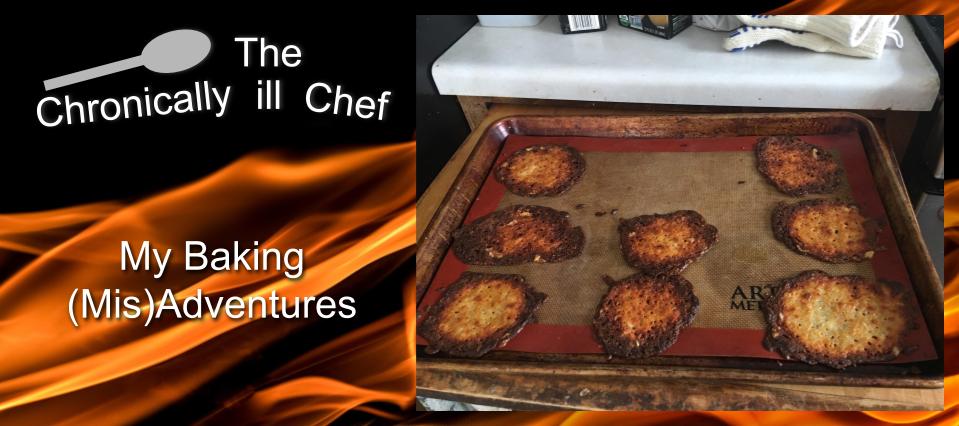
My Baking (Mis)Adventures: Special Cereal Bars

I kept messing up the thread thing for this recipe on Twitter, but here is the live-tweet of it. Here’s a link to the recipe if you are interested, special cereal bars. This recipe took 29 minutes from the first ingredient put in to it being done, but you have to keep stirring the entire time.

How to Stay Cool in the Kitchen: MiniTip XVIII

TL;DR

Here are some tips for keeping cool when you are in the kitchen:

  1. Sit when you can
  2. Open a window if it’s cool outside
  3. Bring a fan into the kitchen and sit by it
  4. Put ice packs on your neck and wrist

Tip Expanded

When you are chronically ill, lots of things can go wrong with your body. For me, that means that I have anhidrosis caused by small fiber peripheral neuropathy. That means that I don’t sweat because my nerves are either dead or dying.

So, this leaves me susceptible to heat-related illnesses like heat stroke or heat exhaustion. I’ve already had the heat exhaustion once and I don’t want to do it again. I had like I had a fever (from hot to cold to hot to cold) for 4 straight days after I got didn’t do anything after I got overheated and dehydrated.

Cooking, therefore, is a difficult thing to do safely for me because there is a lot of heat. So, here are a few tips that I try to use to keep myself cool.

Sit when you can

My first MiniTip was all about this. When you sit, you don’t build up as much body heat and you are also not directly in front of a heat source that may cause problems.

Open a window if it’s cool outside

I live in Minnesota, and a lot of the year is cold here, so I can open a window to cool down the room and myself. The one flaw of this technique is that it will probably slow down the cooking process if you are using the stove. But if I had to choose between heat stroke/exhaustion and taking a bit longer cooking, I’ll cake the bit longer cooking.

Bring a fan into the kitchen

No, not someone who is really into you. I apologize for that ridiculous joke and promise to never do it again. I guess you could bring someone who is really into you into the kitchen when you cook, but I was talking about a fan that blows air at you and you can say “Luke, I am your father” into. Bringing a fan into the kitchen and setting it up right by your chair will help you keep cool.

Here’s a tip for those who have dry eyes, position the fan so it is not facing you directly or keep your eyes closed while it is blowing directly on you. I say this because fans can really dry out your eyes, which you kind of need to be able to use when cooking.

Put ice packs on your neck and wrist

If you have tried these tips and they aren’t working for you, then try using some ice packs. I have found that putting cold water or an ice pack on my wrist can help cool me down much quicker than putting the water on my face or neck. There are also cooling vests that I haven’t been able to afford, but they are vests that you put ice packs into and they can help keep you cool while you cook.

So, ultimately, try these tips, try some of your own ideas to keep yourself cool in the kitchen if you need to. If you don’t, then ignore everything that I’ve said because it probably doesn’t apply to you. But whether or not you need to keep yourself cool or not, enjoy cooking.

One final thing, you might find a strategy that works for you in any aspect of cooking that everyone else finds crazy or illogical. But if it works for you, do it. Because there are many ways of doing every task, so find the way that works for you and do you.

Broiled Tilapia Parmesan

Ingredients

  • 1/4 cup Parmesan cheese
  • 2 tablespoons butter, softened
  • 1 tablespoon and 1 1/2 teaspoons mayo
  • 1 tablespoon fresh lemon juice
  • 1/8 teaspoon dried basil
  • 1/8 teaspoon ground black pepper
  • 1/8 teaspoon onion powder
  • 1/8 teaspoon celery seed
  • 1 pound tilapia fillets

Directions

  1. Preheat your oven’s broiler. Grease a broiling pan.
  2. In a small bowl, mix together the Parmesan cheese, butter, mayo, lemon juice, dried basil, pepper, onion powder, and celery salt.
  3. Arrange the fillets in a single layer on the broiler pan. Broil a few inches from the heat for 2 to 3 minutes.
  4. Flip the fillets over and broil for a couple of minutes on the other side.
  5. Remove the broiling pan from the oven and, using a spoon, spoon the parmesan cheese mixture onto each fillet until every one is coated evenly.
  6. Return the broiling pan to the oven and broil for another 2 minutes or until the topping has browned.

Story Time with The Chronically ill Chef

I was trying to remember when I first found this recipe and I can’t remember.

I never really liked fish before I made this recipe. When all you have to choose from is store-bought fish stick or, yep, you guessed it, store-bought fish stick, it isn’t all that great. But when I made this recipe, I was amazed at the flavor of both the fish itself and this recipe. This recipe works so well flavor-wise.

In July, I’m going to be replacing Friday’s MiniTip with a weekly series on complementary flavors. And one of those is going to be talking about fish and lemon. Lemon and dill work amazingly with fish, it really complements the taste of the fish.

State of the Kitchen 7: Second Opinions

I forgot to write this series last week because the brain fog hasn’t lifted yet. Not really. I have been able to cook 2 times since my last post, but that’s it. I’m hoping that I can do more, but I’m trying to just be patient with myself and my body and hopefully it will get better. But I’m trying to prepare myself that it may not get better.

Health Update

On the health front this week, I saw my endocrinologist this week.

  • I have normal testosterone results,
  • My A1C is 7.3 (higher than last time),
  • My weight was 401.6 pounds.

I take Victoza for my diabetes and weight loss, and apparently the Victoza might be making my gastroparesis worse because one of the things that Victoza does is slow down stomach emptying.

I had known that it slows down the stomach, but the medical studies I had read said that it only affects gastric emptying for the first hour after eating a food, not 4 hours after. But I do have gastroparesis, we just don’t know to what extent the Victoza is affecting it. I see a gastroenterologist at the end of this month for a second opinion.

My Opinion on Second (or Third, or Fourth, or Fifth) Opinions

Second opinions are vitally important for chronically ill people because a lot of things that I have been diagnosed with were overlooked, ignored, or not found by the first doctor I went to. I went to the Mayo Clinic and they just told me that I was fat and needed bariatric surgery. I have gastroparesis and malabsorption issues, so I knew that was not a good idea because it would probably kill me.

I was on 4 pills of iron every day for 6 months in 2009 when I had an iron deficiency. That is the kind of prescription that will mess you up and turn your crap black (literally) and probably get too much iron. It didn’t affect my iron levels at all. I still had iron deficiency anemia.

I ended up needing 12 iron infusions that year, where I eventually learned I was allergic to all forms of iron at the time. Iron sucrose and iron dextran were the only ones that existed. They told me there was a new iron during my last iron infusion, but I decided not to continue with the iron infusions because they weren’t really helping anyways..

The point of that story is that I had malabsorption issues, 4 pills of iron every day should have gotten me to normal and they did absolutely nothing. So if I had just trusted the doctors at Mayo, then I would have gotten gastric bypass surgery, which would bypass a bunch of my villi (fingerlike-tendrils) that absorb nutrients, meaning I had to take vitamins that I wouldn’t absorb. In addition, my inflammation markers at the time were ESR: 96 and CRP: 43. That’s a LOT of inflammation.

If I had trusted the first doctor (Which I did at the time), I would have thought my heart was completely fine. They did an ultrasound that couldn’t get an image of anything because I have a lot of fat on me. I got the results back, “Everything’s normal.” About a half-a-year later, an infectious diseases doctors said, “How can it be normal, they weren’t even able to get a good enough image to see if it was normal?”

So, off I went to a second opinion for my heart. The doctor didn’t think anything would come of it, but “let’s just make sure.” He ordered a heart MRI, and guess what, heart failure.

If I had trusted the first doctor, I would have believed that the MRI of my brain was completely normal. Upon going to the second doctor and getting another MRI of my brain, they found a brain tumor. A tiny one, but one none-the-less, 3 millimeters on my pituitary gland.

In other words, if you are chronically ill, please don’t be afraid of getting a second opinion if something seems off. If you think you have something and they just shrug it off without checking for it or they just minimize what you are going through, go to a second doctor.

If I had trusted the first doctor, I would have thought it wasn’t rheumatological, well, they seriously think I have Sjögren’s Syndrome.

Speaking of Sjögren’s Syndrome, the doctor has put me on Plaquenil, an antimalarial drug, that has shown positive results for half of people with Sjögren’s Syndrome. According to my rheumatologist, it’s not FDA approved for Sjögren’s Syndrome because the FDA apparently requires that a medication work for 60-70% of people to be marketed as a drug that effectively treats it.

What I Cooked in the Last Two Weeks

It hasn’t been that good of the last two weeks for energy. I forgot to write this series last week and have only been able to cook two things.

Special Cereal Bars

Ingredients

  • 1 cup sugar
  • 1 cup white syrup
  • 1/2 cup butter
  • 1/2 cup peanut butter
  • 6 – 8 cups gluten-free cereal
  • 1 cup butterscotch or caramel chips
  • 1 cup semisweet chocolate chips

Directions

  1. Boil the first three ingredients for about 1 minute.
  2. Add peanut butter.
  3. Mix in cereal
  4. Put into a greased 9 x 13 pan.
  5. Melt the butterscotch and semisweet chocolate chips together using a double boiler.
  6. Pour on top of the cereal mixture.

Story Time with The Chronically ill Chef

I grew up with this recipe. My dad loved it and my mom made it for him on his birthdays and anytime we asked for it. It is a very simple recipe, but it tastes so good.

When I was growing up, we used Special K cereal, but Special K cereal isn’t gluten free, or at least it wasn’t the last time I checked. I think they marked it as gluten free for a very short period of time and we were all excited, but then they decided to take the label off, so we were left…unexcited?

Here’s a tip for eating it, don’t eat it all at one time. There were many a time I did not feel good after eating half a pan of these. I wouldn’t say that it was lack of self-control, I would say that I decided that special k bars would be my supper. So, I kept eating them until I was full. And then I was in pain. So, moderation…or not, it’s up to you how you eat them.

How, Why, and When to Hone a Knife: MiniTip XVII

TL;DR

It is important to hone your knives when they begin to get dull because the most dangerous item in the kitchen is a dull knife. You can hone it with a honing steel. Watch this video if you need a demonstration.

Tip Expanded

So, if you look at some knives, they have visible serrated edges. These are often used for carving meat and cutting bread. The reason I bring this up is that every knife, at a very magnified level, looks like this. So, the knives where you don’t see any serrated edges, but it is sharp enough to cut a tomato, have tiny serrated edges that you would only probably be able to see with a microscope.

There are two possibilities for why knives may not be able to cut through a tomato without crushing it. The first possibility is that the serrated edges just aren’t as peak-y anymore. So, the blade has actually dulled in this case. So, you want to sharpen it on a whetstone or actual sharpener.

However, for this post, I’m going to be talking about the second possibility. So, imagine the serrated edges, they are as peak-y as they were when you first got it. However, the peaks are pointing in different directions. Some are pointing to the left, some to the right, some down the middle. This is when you hone the knife. If you are not sure, you can try and do both and then you’ve got your bases covered.

One thing to note is when you sharpen a knife, you are losing some of the metal on the knife. So, technically if you keep sharpening it, you’ll be left with a stump, but it would probably take quite a long time, depending on how big the knife is.

The reason you want to hone your knife is that when a knife is dull, you have to push harder or make longer strokes, which can potentially make the knife slip and cut you. We don’t want you to accidentally cut off the corner of your thumb like I did when I was cutting some cabbage a few weeks ago.

I recommend that you hone your knife every time you use it because it just gets all of the grooves back in order in case they got out of order the last time you cut it.

I‘m not sure how to hone serrated edges of knives yet, but I will figure it out and share it with you. For this post, I’m going to just talk about the non-serrated edge knives.

Here’s a video of people much smarter than me showing you how to hone a knife.

The Slow Cooker: MiniTip XVI

TL;DR

The slow cooker is an amazing tool for chronically ill people and people who don’t have time to cook. You just throw a bunch of ingredients in and it cooks it all for you while you are sleeping or at work.

Tip Expanded

The Slow Cooker, the crockpot, the dump-and-walk-(away). It’s an amazing tool that I can’t recommend enough. When I was working, I would buy 2 pounds of chicken breasts and throw them into the crockpot before I went to work. Then, when I came back 6-7 hours later, they were fully cooked and fall-apart tender. I would rip the chicken breasts up into chunks and then coat that with barbecue sauce. It was delicious and so simple.

Crock pots are an amazing tool for chronically ill people and people who don’t have time to cook. A few weeks ago, I made a Greek leg of lamb in the crockpot and it was so tender that it fell apart with just a fork.

Here are my four biggest tips for cooking with a crockpot:

1. When you are cooking vegetables alone, cook on high,
2. When you are cooking meat with or without vegetables, cook on low. If your recipe recommends a temperature, then go with that. But oftentimes, I see that people do “this amount of time on high or this amount of time on low.”
3. When you are cooking, don’t remove the cover. This will break the seal of steam that everything is cooking in, allowing the steam and flavor to escape.
4. The longer you cook it, the more tender it becomes. You are probably going to want to cook meat longer than you think it should be, possibly 8-12 hours depending on how tender you want it. I haven’t experienced meat drying out in the crockpot.

One thing that I would like to do is figure out how to redo recipes that are on the stove so you can just do them in the crockpot. There are some flaws to this, you won’t get caramelization (a browning) of the meat or vegetables, which adds color and a bit of flavor.

The reason I am wanting to do this is because I have anhidrosis, which means that I don’t sweat. This makes cooking over the stove a potentially dangerous thing for me to do because I could get overheated and get heat exhaustion or stroke if I’m not careful.

Luckily, or unluckily, I’m pretty sure my body has a new sign that I need to cool down where it feels like I am being stabbed in my back by a thousand needles. It’s lucky because my body tells me before I have a heatstroke or exhaustion, but it is unlucky because it is absolute agony if I don’t get cool right away.

Korean Ground Beef Stir-Fry

Notes on this Recipe

Note 1: When I was developing it, I made it once with teriyaki sauce because I didn’t have any tamari sauce. In my opinion, it came out too sweet, because there is already 1/4 cup of brown sugar. So, if all you have is teriyaki sauce, I advise that you cut back on the brown sugar. Because there aren’t any eggs or anything in the sauce, take a spoonful to decide if you like the flavor or not first with no brown sugar, then add 1/4 of the 1/4 cup.

Note 2: In my bullet lists, I have some nested bullets, specifically under the ginger root and cooked rice. I do this as an alternative if you don’t have fresh ginger root or cooked rice.

Ingredients

  • 1/2 cup soy/tamari sauce
  • 9 cloves garlic, finely minced or grated
  • 1 tablespoon onion powder
  • 1/4 cup brown sugar
  • 1/8 cup ginger root crushed
    • OR 3 tablespoons dried ginger root
  • 1/8 cup sesame oil
  • 1/8 cup rice vinegar
  • 2 teaspoons chili powder
  • 1 pound ground beef
  • 4 eggs
  • 1 tablespoon sesame oil
  • 5 cups cooked rice
    • OR 2 cups uncooked rice &
    • 4 cups water

Directions

To Make the Rice (skip this step if you already have cooked rice)

  1. Stir 2 cups of rice and 4 cups of water in microwavable bowl.
  2. Cook on high for 5 minutes.
  3. Cook at 50% for 22-25 minutes.

Main recipe

  1. Whisk together the sauce ingredients, set aside.
  2. Cover a small skillet with 1 tablespoon of sesame oil over medium heat. In a separate bowl, crack and scramble eggs. Pour into the skillet and cook for about 6 minutes. Turn off the heat as soon as they start to firm up (you’ll be cooking them more later, so you don’t need to overcook them)
  3. Place a large pan over medium-high heat. Brown the ground beef, breaking the meat up, about 4-6 minutes.
  4. Leave the fat in the pan (unless you really don’t want to) and stir in the sauce mixture, eggs, and rice, cook for 3-4 minutes, heating up the sauce.

Story Time with The Chronically ill Chef

I love Asian food, I love stir-fries, and I love mixing the rice straight into the dish so the rice can be coated in the sauce. So, that’s what I did with this recipe. Yeah, how’s that for a very succinct Story Time with The Chronically ill Chef?

Design a site like this with WordPress.com
Get started